
How to Protect Your Parents (or Kids, or Friends, or Yourself) from Being Scammed
Many people approach scam prevention as an information problem. The common advice is familiar: avoid suspicious links, ignore unknown callers, protect passwords, and stay alert online. Those recommendations are useful and necessary, but they only explain part of why scams succeed.
People who know about scams still become victims every day. Retirees, professionals, college students, teens, and experienced internet users can all find themselves manipulated by a convincing message, phone call, or urgent request. Awareness alone does not always prepare someone for the psychological pressure built into modern scams.
Scammers study human behavior carefully. Their goal is often to create emotional conditions that make quick reactions more likely. They use urgency, fear, excitement, authority, confusion, social pressure, or love and trust, to influence decisions. In many cases, they try to push someone into acting before they have time to slow down and verify what is happening.
A fake bank alert may arrive while someone is distracted at work. A grandparent may receive a panicked phone call from someone who sounds exactly like a family member. A teenager may receive a threatening message about an account suspension or leaked photos. A parent may open an email that appears to come from a school or medical office.
These situations affect people emotionally first and intellectually second. That reality shapes the way scam prevention needs to be taught.
Scam Prevention Requires Habits and Practice
Many forms of safety training rely on repetition and practice because stress changes how people think and react. Schools conduct fire drills repeatedly so students become familiar with the process. Pilots train in simulators so they can respond calmly during emergencies. Athletes repeat fundamental movements until they become automatic under pressure.
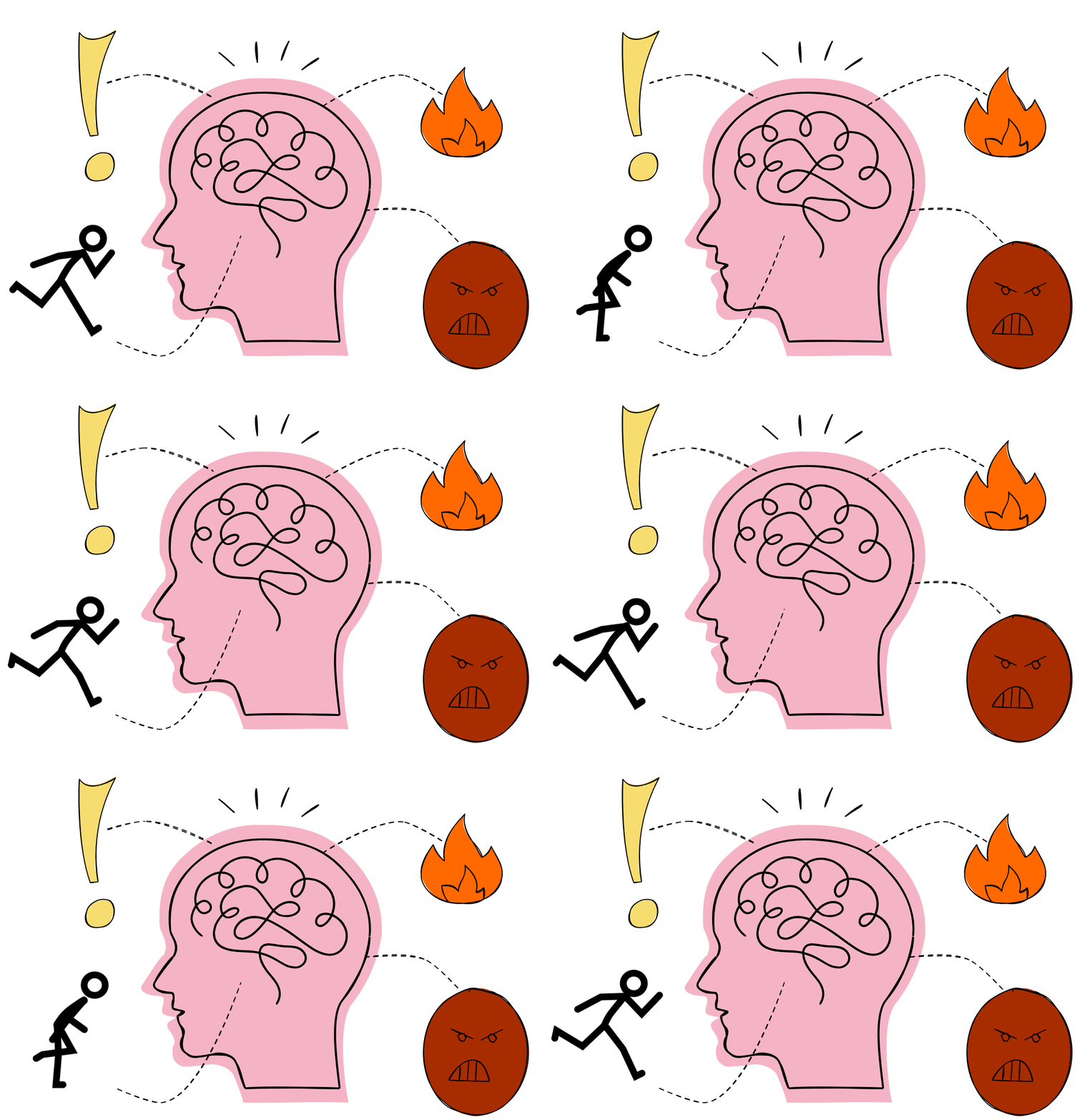
Scam prevention benefits from a similar approach. When people feel rushed, embarrassed, anxious, isolated, or emotionally overwhelmed, decision-making becomes more difficult. Familiarity with scam warnings may help, but defensive habits often matter even more in the moment.
That understanding guided the creation of our Scam Defense Skills videos. The goal was to develop learning tools that help people recognize manipulation patterns and practice protective habits that apply across many different scams.
Showing Realistic Scenarios Creates Stronger Recall

Many educational approaches focus heavily on lists of scam types and warning signs. Those resources can help people recognize certain schemes, but realistic examples often create stronger memory and emotional recognition.
For that reason, our videos use simulations, stories, and real-world examples that resemble situations people encounter every day. A suspicious text message, a convincing voice call, an urgent payment request, or a fake family emergency can become much more memorable when viewers see how the interaction unfolds step by step.
This kind of training helps people recognize recurring psychological tactics instead of memorizing isolated examples. Scam techniques constantly evolve, especially as new technologies and AI tools become available. However, the emotional strategies behind scams remain remarkably consistent. Scammers continue to rely on urgency, authority, fear, trust, excitement, and distraction because those tactics influence human decision-making effectively.
People who learn to identify these emotional patterns often become more resilient across a wide range of scam attempts.
Simple Defensive Habits Provide Broad Protection
Many scam warnings focus on individual scam types. A person may learn about one phone scam while remaining vulnerable to a completely different email or social media scam the following week.
Scam Defense Skills emphasizes broader protective habits that work across many situations. The purpose is to create simple routines that families can practice consistently.
Examples include:
Pausing before responding emotionally
Screening the sender before replying
Contacting organizations directly through official channels
Discussing suspicious situations with a trusted person before sending money or information
These habits create time and distance between the scammer’s pressure and the person’s response. Since many scams rely on urgency and emotional momentum, even a brief pause can significantly improve judgment and decision-making.
Simple habits also tend to hold up better under stress. Complicated checklists may become difficult to remember during emotional situations, while repeated defensive routines can become more automatic over time.
Scam Prevention Works Best as an Ongoing Family Conversation

Scammers target people of all ages and backgrounds. Older adults may encounter impersonation scams or financial fraud schemes. Teenagers may face sextortion scams, fake giveaways, or account takeovers. Parents may receive convincing school-related messages or package delivery scams. Young adults may encounter fake job opportunities or peer-to-peer payment fraud.
Although the details vary, many scams rely on the same emotional pressures:
Trust
Fear
Urgency
Curiosity
Social pressure
Hope
Isolation
Because of this, scam prevention becomes more effective when families and friends discuss scams openly and regularly. Conversations help people feel more comfortable asking questions, verifying suspicious messages, and seeking outside perspective before acting.
A shared family culture around verification and discussion can reduce the isolation scammers often try to create. People who regularly talk about scams may become more willing to pause and consult someone else during uncertain situations.
Watching educational videos together, discussing scenarios, and sharing suspicious messages can all help strengthen awareness and defensive habits over time.
Engagement Matters
Scam prevention requires ongoing attention because scams continue to evolve. Criminal organizations adapt quickly to new technologies, social trends, and communication platforms. AI-generated voices, realistic fake websites, and convincing impersonation tactics have increased the sophistication of many scams.
Educational videos and courses can provide valuable preparation, but engagement and discussion play an important role in long-term retention. Families often benefit most when they revisit these topics periodically rather than treating scam prevention as a one-time lesson.
Regular conversations can help reinforce habits such as slowing down, verifying independently, and involving trusted people before making important decisions.
Scam Prevention Is Becoming a Core Life Skill
Modern scams appear across nearly every part of digital life:
Text messages
Social media platforms
Email
Phone calls
Online marketplaces
Dating apps
Payment apps
AI-generated content
As digital communication becomes more integrated into everyday life, scam prevention increasingly functions as a practical life skill. Strong defensive habits can help people navigate uncertainty, emotional pressure, and increasingly sophisticated forms of manipulation.
We create Scam Defense Skills videos to support that process through realistic scenarios, practical habits, and continued family discussion. The goal is to help people build confidence, recognize manipulation patterns, and respond more thoughtfully during high-pressure situations.
Preparedness grows through repetition, conversation, and practice. Families who make scam prevention part of regular discussion can create stronger awareness and stronger support systems for everyone involved.
